Emma Kexin Wang
Japanese Folklore Then and Now: Ghosts, Monsters, and Spirits
From mischievous river spirits to vengeful ghosts, these creatures have long embodied the fears, social critiques, and humor in Japanese folklore—and how those anxieties continue to haunt the present.
Fox spirits, one-eyed priests, bird-beaked demons parade the streets of Kyoto in broad daylight. Named after a tale that’s been around since the 8th-century, Hyakki Yagyō (百鬼夜行), literally the night procession of a hundred demons, is now an annual parade that celebrates Japan’s longstanding tradition of yōkai (妖怪) storytelling.
So what exactly are yōkai? If you’ve watched Ghibli or Japanese horror, you might’ve heard the term translated as monster, spirit, ghost, or demon, but none which precisely capture its historical breadth. Instead, yōkai encompasses a wide assortment of supernatural entities, including animal spirits, cursed-humans, and paranormal phenomena. Contrary to usual negative connotations, yōkai are not uniformly malicious, some even bringing good luck.
Earliest records can be traced to the Heian period (8th to 12th century), but yōkai storytelling truly flourished during the Edo period (17th to 19th century) as literary rates rose and popular culture thrived. No longer the undifferentiated succession of the 8th-century Hyakki Yagyō, artists like Toriyama Sekien built on oral traditions to write new volumes like Illustrated Night Parade of One Hundred Demons, individualizing yōkai with names, descriptions, habits, and legends in almost encyclopedic form.
One of the most recognizable yōkai, kappa1 (河童), literally “river child”, reveals that along with the intended scare, these creators and their audiences were having fun. Appearing as humanoid reptilians, kappa dwell in rivers where they drown, bite, or devour alive unfortunate victims. Along with human entrails, they also love eating cucumbers. According to legends, kappa, who are extremely intelligent and mischievous, had taught humans medicinal knowledge, for which they are revered in Shinto as river gods.
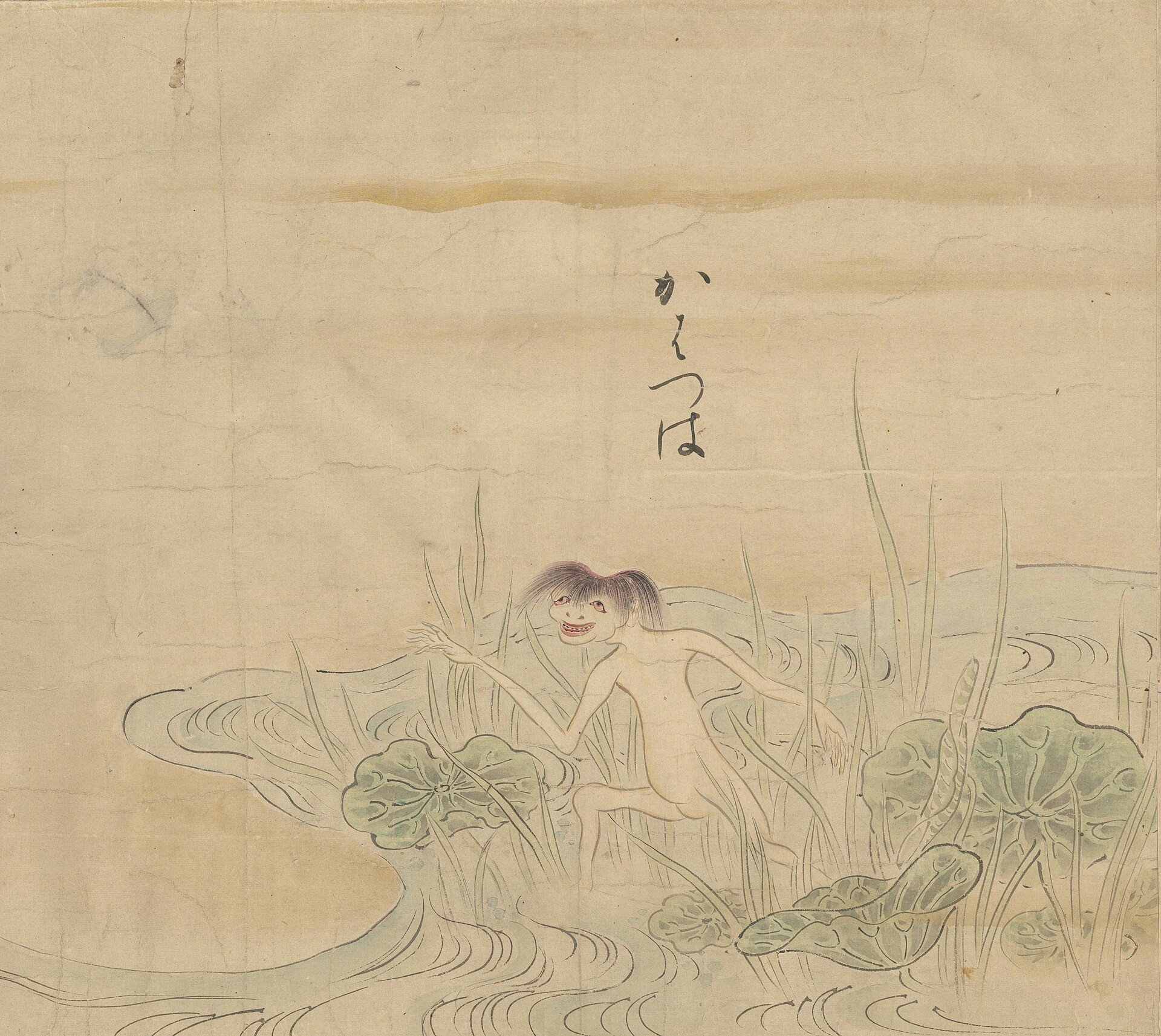
Source: Bakemono no e
Onibi (鬼火), literally “demon fire,” are blue flames found in graveyards, grasslands, and wetlands. Since onibi often appear in the rain, travelers can mistake them for lanterns, and, upon approaching, are overwhelmed with these ghost fires, which then suck the life force out of them. Appearing across many different cultures, onibi is an example of stories explaining paranormal activity, one which modern science hypothesizes as the combustion of flammable gas.
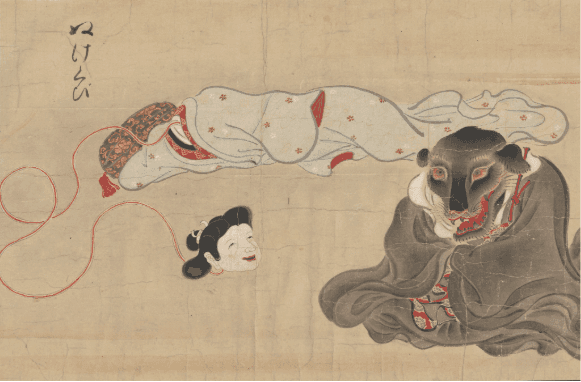
Rokurokubi (轆轤首) is one of the few yōkai originating from humans. Her creepy appearance, thanks to the long, extendable neck, is deceptive, as rokurokubi are harmless entities, whose only strangeness is a penchant for eating candles at night. Only women can turn into rokurokubi, sometimes as a result of her sins, but more often as punishment for the misdeeds of men. One legend tells of an innkeeper’s daughter turned into a rokurokubi after her father murdered her mother. The innkeeper was unharmed.
The onryō (怨霊), though not a yōkai but yūrei (“ghost”), are spirits who seek vengeance on the person who had wronged them in life. While there exists male onryō, the most famous onryō are women, who, like the rokurokubi, are often innocent victims of men. Adapted over thirty times since its first stage in 1825, the kabuki play Yotsuya Kaidan (四谷怪談) follow Oiwa’s onryō as she haunts the husband whose actions resulted in her suicide. For Oiwa and the many women onryō, only in death can they enact the karmic justice denied to them in life, their very existence criticizing a social order in which women were helpless against male violence, desire, and hubris.
After disappearing for a period of during WWII, yōkai stories were repopularized by manga artist Mizuki Shigeru’s GeGeGe no Kitarō in 1960. The comic follows Kitaro, the last survivor of his Ghost Tribe, as he adventures through a world full of yōkai, and we see the continual legacy of this series today. From Pokemon to Ghibli to horror, contemporary Japanese media is populated with reimaginations of traditional folklore. Totoro, the official mascot of the iconic Ghibli franchise, is perhaps the “world’s most famous yōkai”. If we were to write an entry for Totoro, per 17th-century tradition, we might note its appearance as a cross between a panda and a huge furry rat, its behavior as mysterious yet filled with childlike joy (delighted by the sound of rain on an umbrella), its relationship with humans as distant though playful, sometimes bestowing otherworldly assistance.
Other Ghibli films follow a similar ethos of human-yōkai relationship. Like Totoro, the franchise’s yōkai are never purely malevolent, nor are they ever subservient to common visions of human-centrism. In Princess Mononoke, literally “Princess Monster”, the deer god of the forest commands a sublimity, his face simultaneously fearsome and compassionate as his life force sustains the entire forest ecosystem. However, as human greed directly causes his beheading, his decapitated body transforms into a destructive force, threatening complete disaster until the natural order has been righted.
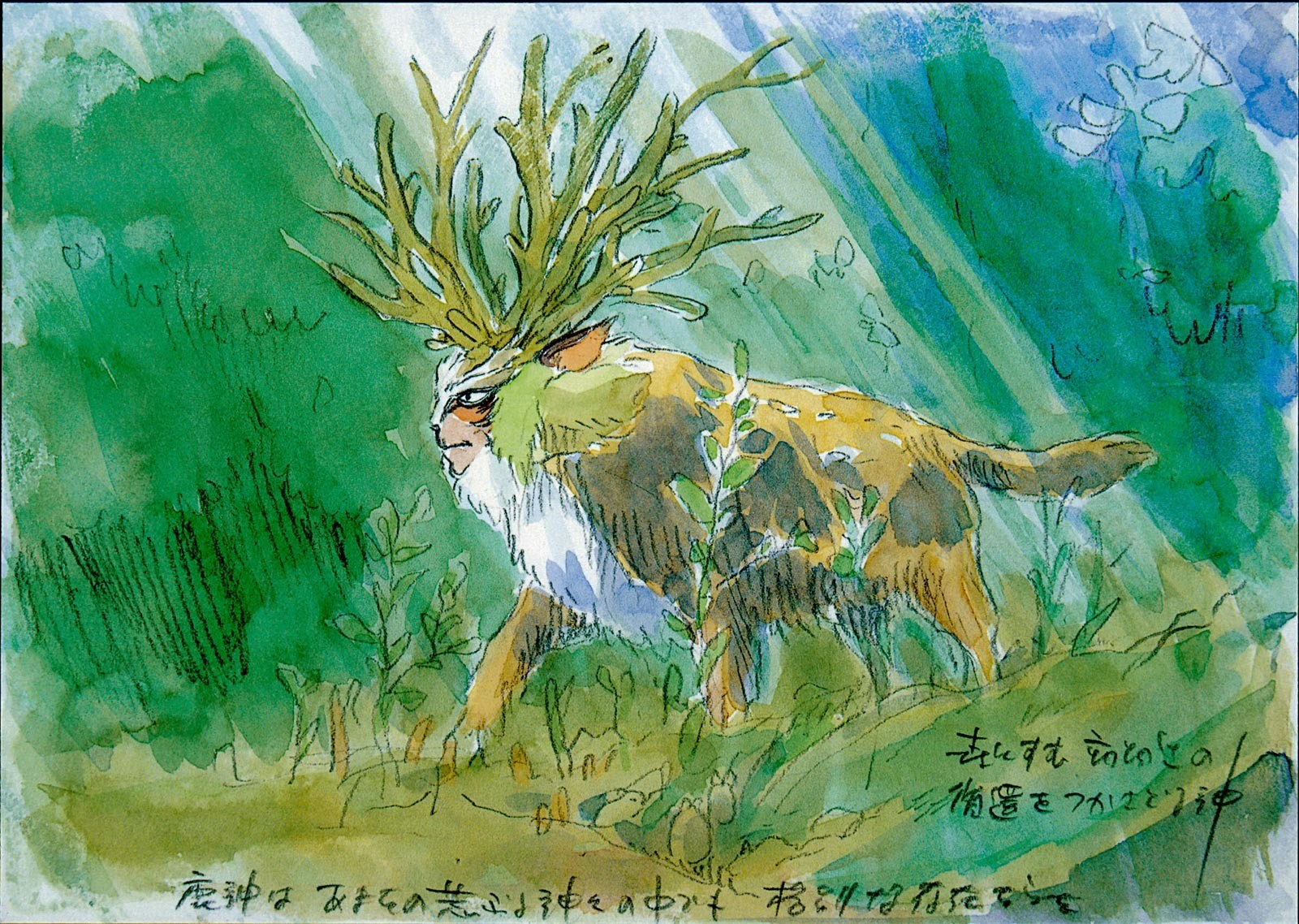
Source: Hayao Miyazaki
Outside of Ghibli, the onryō has become a staple of not only J-horror, but of the horror genre itself. Most iconic is Sadako from The Ring, whose long black hair shrouds her misshapen features as she claws her way out of the television. Lesser known is that Sadako’s story is inspired by Yotsuya Kaidan, with Sadako herself following the original designs for Oiwa’s stage make-up. Almost two centuries later, the vengeful woman spirit still finds its resonance with contemporary feminist struggles.
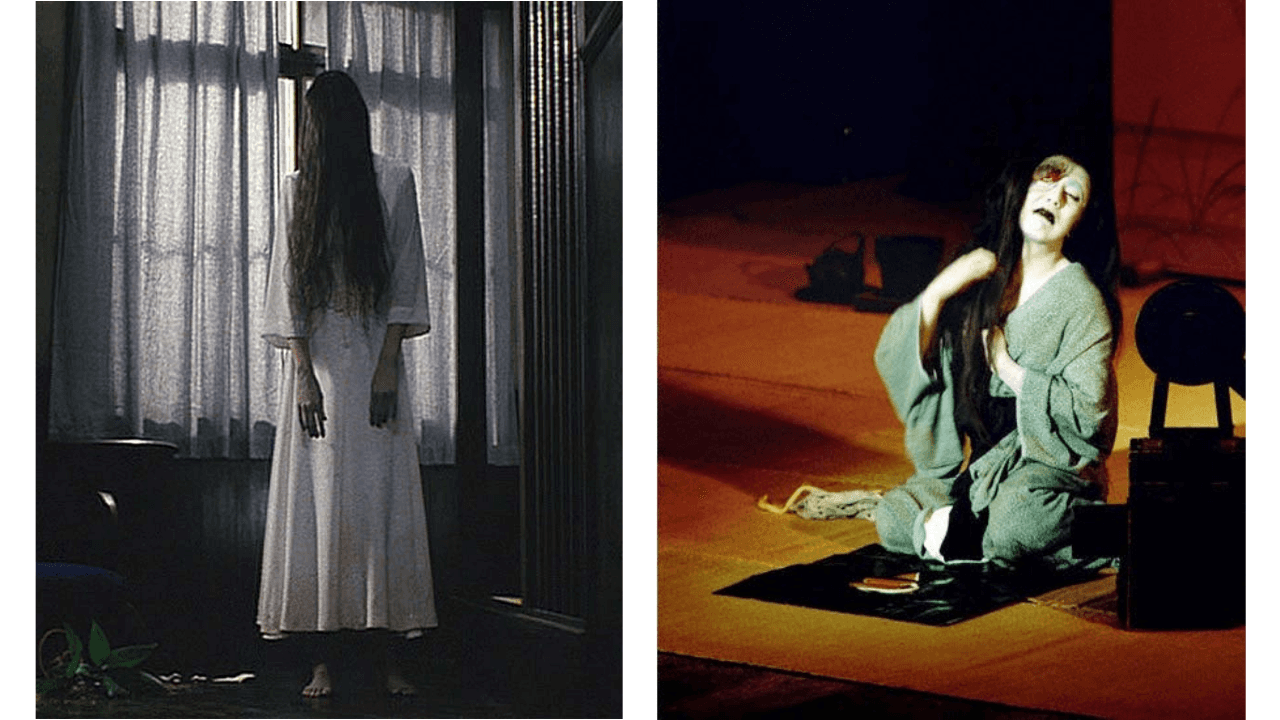
Source: The Ring; Japan.org
Though the essence remains, Sadako was adapted to reflect the anxieties of its moment. Made in 1998, The Ring transposes the onryō onto VHS tapes, onto TV. The film’s innovation then is the exploration of the fear of this new media, in the ability to seemingly “go back in time” with rewinding videos, the fear of a moving image becoming the real. As our media landscape changes, Sadako goes on to haunt the internet, YouTube videos, social media, as old fears transform into new ones, and old stories are made fresh again.
Ghost stories, fairytales, and folklore have existed across time in all different cultures. There’s something about the supernatural, the mysterious, the scary that keeps drawing us in. Japanese yōkai, ranging from blue flames to semi-cute frog creatures to cursed, long-necked women, offer a mirror for both our past and present: What used to scare us but no longer? What mysteries confused us that we have now solved? What, after all these centuries, are we still afraid of?
For more information on yōkai, check out The Night Parade of One Hundred Demons: A Field Guide to Japanese Yōkai by Matthew Meyer
LATEST