Emma Kexin Wang
The Illusory World of Satoshi Kon
Two decades after his last film, Satoshi Kon remains one of Japan’s —and the world’s— most influential filmmakers.
You might know him for his iconic debut: After quitting her idol group to become an actress, Mima is stalked by an ex-security guard, sexually exploited by the entertainment industry, and becomes haunted by a hallucination of her past idol self, everything eventually coalescing in a plot twist that completely derails the audience’s already-feeble grasp on reality. These themes — the blurring of reality and illusion, of dream and waking, of real-life and TV — would reemerge across Satoshi Kon’s brief, but immense filmography.
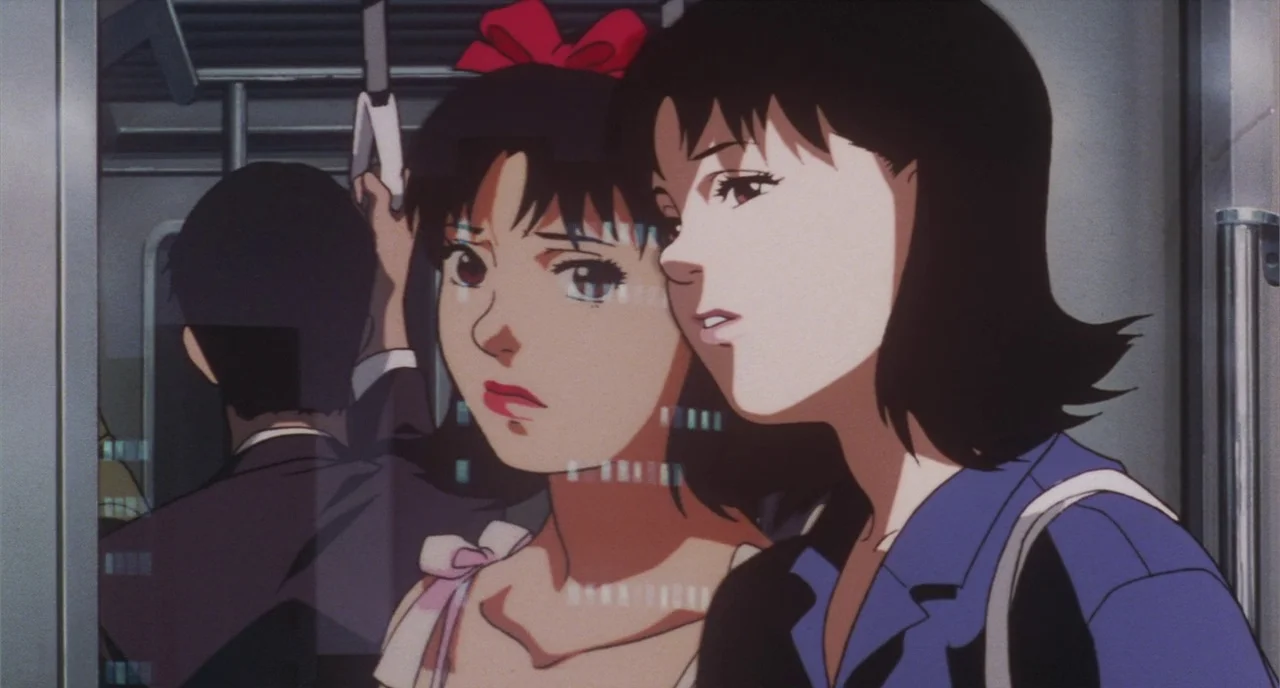
<Image: Still from Perfect Blue (1997) Courtesy of Light House Cinema Dublin Ireland>
Often lauded for its first-of-its-kind critique of the Japanese idol industry, Perfect Blue (1997) also depicts the period’s anxiety about the newly democratized virtual web. “Mima’s Room,” a website topped with an intimate photo of Mima lying in bed, contains scarily-accurate journal entries of her private life, its anonymous author a new kind of ghost behind the fluorescent screen. In one scene, Idol Mima emerges from the computer and declares herself the “real Mima,” an image we understand to be both her fans’ projective ideal as well as her own fear of a lost identity.
Almost thirty-years after its release, Perfect Blue’s prophecy of new technology disintegrating security is more relevant than ever. Your phone might just be listening to you, as personal data is sold to corporations to target advertisements. Deepfake’s humorous marketing disguises its breach in biometric security, especially for pornographic content. Kylie Jenner is the new face of the extremely unconsensual Meta glasses. But just as Mima imagines a ghost of her Idol self behind “Mima’s Room” when it was actually her stalker, it’s easy to forget even now that real people operate and profit off of these invasive technologies.
Though choosing another actress as its protagonist, Kon’s next film, Millennium Actress (2001), displays a more optimistic perspective on the intermixing of separate identities. As a documentarian interviews actress Chiyoko, her memories of the war-time painter she pursues blur together with her past roles (literally, as matches-on-action are spliced together so unpredictably that the film makes several self-referential jokes). Unlike Perfect Blue, this disorientation isn’t sinister, where, instead of losing her sense of self, Chiyoko’s identity remains consistent across the many characters she inhabits. In a final montage, we see the many Chiyokos running across time and space, in snow, on horseback, even on the moon, a never-ending chase that in the end, had been about finding herself all along.
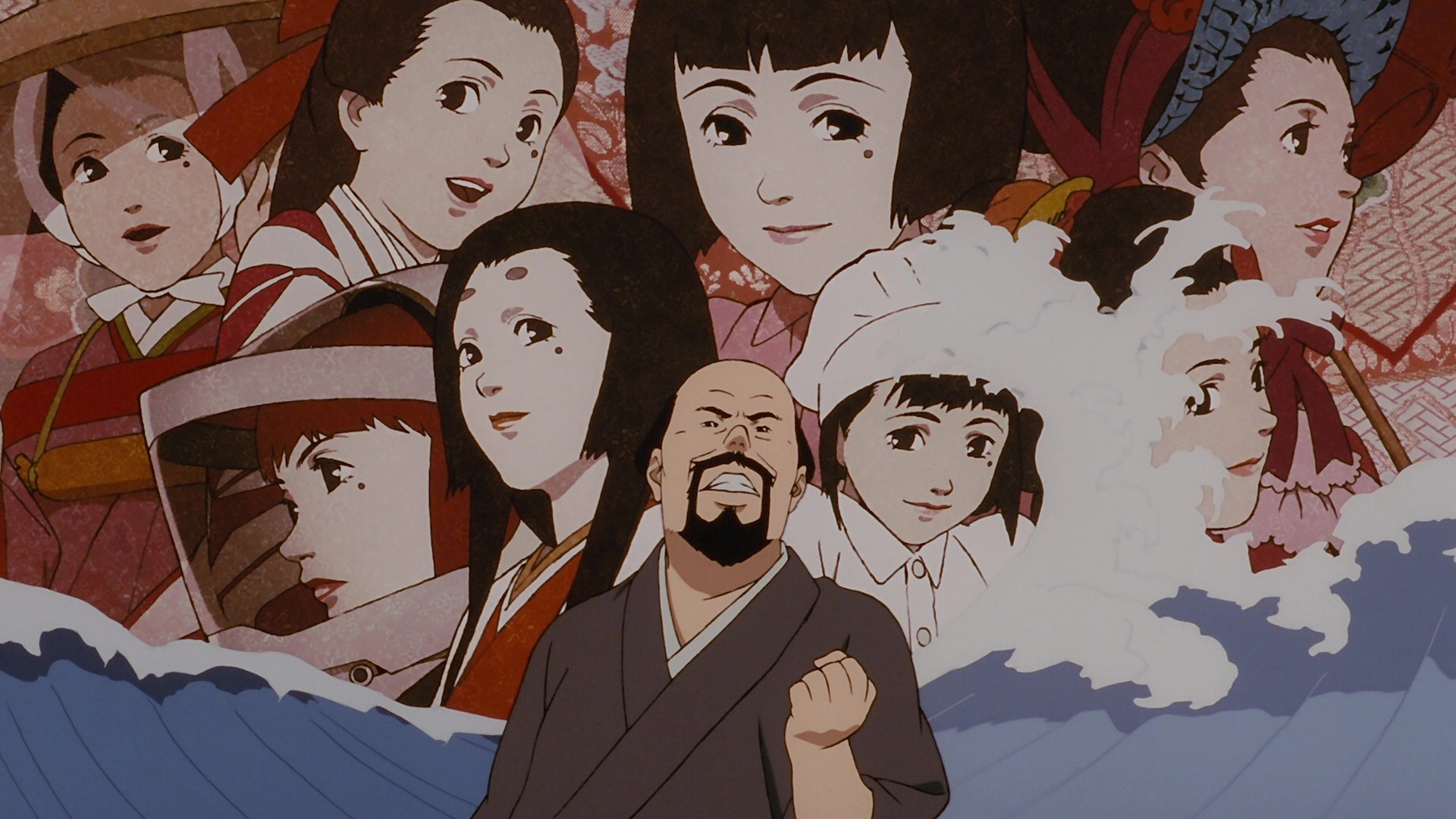
<Image: Still from MILLENNIUM ACTRESS (2001) Courtesy of Kaboom Anime>
There is a taboo in screenwriting, the “and it was all a dream” sequence that nullifies a character’s emotional journey to great irritation for the audience. Of course, there are exceptions to every rule. Kon’s last film, Paprika (2006), is nothing less than a full-on psychedelic fever dream, where the initial clear line between waking and dreaming is blurred more and more, until eventually the absurd dream logic spills, quite literally, into the real, waking world.
In Paprika, the eponymous protagonist uses a device called the DC Mini—which allows access to its user’s dreams—to illegally treat trauma patients. We soon realize that stony-faced Atusko, one of the researchers developing the technology, is the real-world counterpart of Paprika, whose free, whimsical, and mysterious personality embodies the dream-world she inhabits. A Freudian narrative ensues, and both Atusko and the detective she treats can finally face their subconscious fears and desires in their dreams.
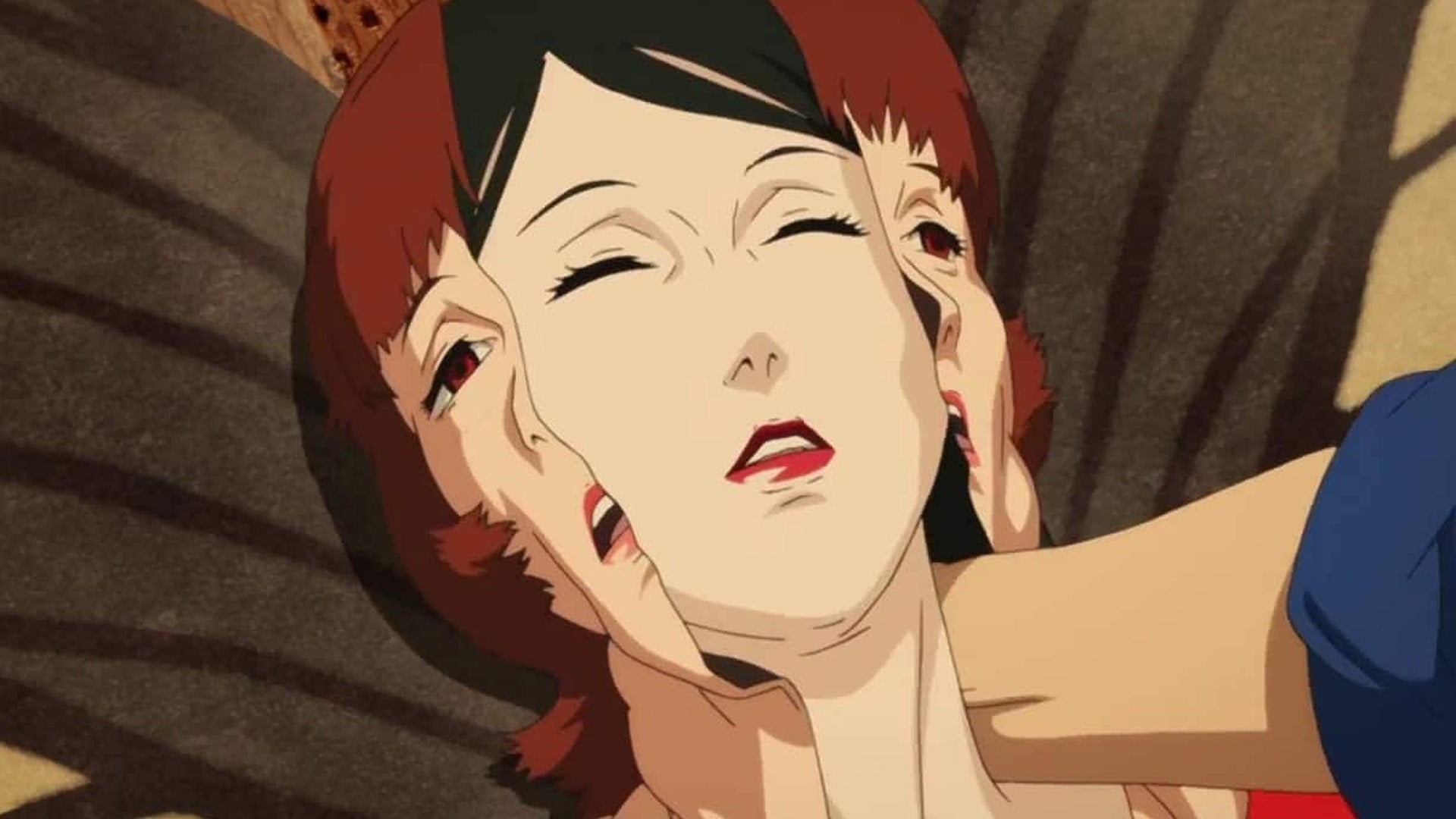
<Image: Still from Paprika (2006) Courtesy of the Portland Art Museum>
As these things go, the DC Mini gets into the wrong hands, and is used to create a rampaging dream parade that ropes the real-world into its relentless march: People speak sentences just on the brink of making sense; salarymen jump off buildings with exaggerated smiles; statues of Buddhas, maneki-neko, and other commodified cultural icons bang and blast their way through the streets of Tokyo, their noise alerting us to many aspects of society’s “nonsensical” underbelly.
Beyond his four acclaimed features, Kon’s opus also includes the TV series Paranoia Agent and the short film Good Morning, the latter taking his stylistic techniques into the most relatable part of daily routine. At only 60 seconds, the short film cleverly depicts the dreariness in the morning through a ghostly double that gets up, brushes their teeth, and showers a few seconds before the actual body, making those of us who haven’t experienced hallucinations of our past selves or become a butterfly in our dreams, enjoy a quiet relatability with the onscreen madness.
The disorientating nature of Kon’s films have inspired many YouTube explanatory videos, endless critical essays, and even cultural products, all sustained by a dedicated fan base who continue to announce Kon’s many innovations within the film world. Take his stylistic match-on-action editing, which splices together different scenes via identical action. Though Kon was not its inventor, he has stretched the boundaries of its usage: in Perfect Blue, Mima enters an apartment onto a stage, completely dissolving the boundaries between public and private; in Millennium Actress, Chiyoko sprints from one role to the next in a cohesive narrative stitching her life and roles; in Paprika, a circus scene swings into Tarzan, the cut an adhesive for the movie’s absurd yet humorous dream logic.
Inspiration turns foul, however, as Kon’s films are often subject to subtle or blatant plagiarism from Western filmmakers. Oscar-winning director Darren Aronofsky’s Requiem for a Dream (2000) and Black Swan (2010) both rip off Perfect Blue, the former stealing an entire sequence frame-for-frame to then call it an homage, whereas the latter’s ideation, visual metaphors, and even main character name (Nina and Mima) are incredibly similar but never acknowledged. Likewise, Inception (2010) contains eerily similar scenes to its animated predecessor, yet Christopher Nolan has never cited Paprika as an inspiration.
Twenty years later, the psychedelic sounds of the dream parade still reverberates across time to reach us. This January, in honor of the legendary director, CINE QUINTO organized a complete screening of his films, and PARCO hosted a Paprika-themed annual Grand Bazar, Paprika pop-ups, and designated restaurants with merch. One beautiful bookmark is of Paprika, her reflection split across multiple shards of glass, each one a slightly different expression, so that on the whole, it creates a humorous stop-motion effect of her disgusted face hidden behind a polite smile, and while we might not ever be able to watch our dreams like she does, that series of different faces might just be something we all can relate to.
LATEST