Wakaba Oto
The Inventor of Modern Japanese Oddities
From divorce ceremonies and handsome men who make office workers cry to capsule toys dispensing strangers' ID photos, Hiroki Terai has built a career out of Japan's strangest ideas.
At first glance, Hiroki Terai's resume reads like satire.
He has organized hundreds of divorce ceremonies where couples smash their wedding rings with a frog-shaped hammer. He created a service that sends hot guys into offices to make employees cry. During the pandemic, he filled a capsule toy machine with passport-style photographs of strangers and watched people line up to collect them.
Each idea has generated headlines precisely because it seems so inexplicable. Yet viewed together, they reveal something far more interesting than a series of viral oddities.
For the past fifteen years, Terai has been asking the same question over and over again: What happens when society creates an emotional need but no obvious way to meet it?
That question first took shape in 2009. A college friend was getting divorced, and Terai realized there was an obvious asymmetry. Weddings had venues, speeches, ceremonies, and customs developed over centuries. Divorce, despite becoming increasingly common, had none. It was an ending that people were expected to navigate alone.
So he invented one.
His divorce ceremonies borrow heavily from weddings while turning it inside out. Couples toast with tea instead of champagne. They use a frog-shaped hammer — a reference to the Japanese word kaeru, meaning both "frog" and "change" — to smash their wedding rings together before placing the fragments inside a small frog monument.
The ritual is unusual, but its purpose is remarkably ordinary: giving people a structured way to acknowledge that a significant chapter of their lives has ended.
Within its first year, Terai had run the ceremony for dozens of couples and logged over a thousand inquiries. By a 2016 count, he'd performed it for more than 350.
What he noticed next had nothing to do with marriage. It was simpler than that: his clients kept crying during the ceremony, and they kept telling him, afterward, that they felt better for it.
In 2013 he built a business around that observation alone, stripped of the divorce context entirely. Rui-katsu — "tear-seeking" — started as public screenings of sad film clips, engineered to get a room full of strangers crying together.
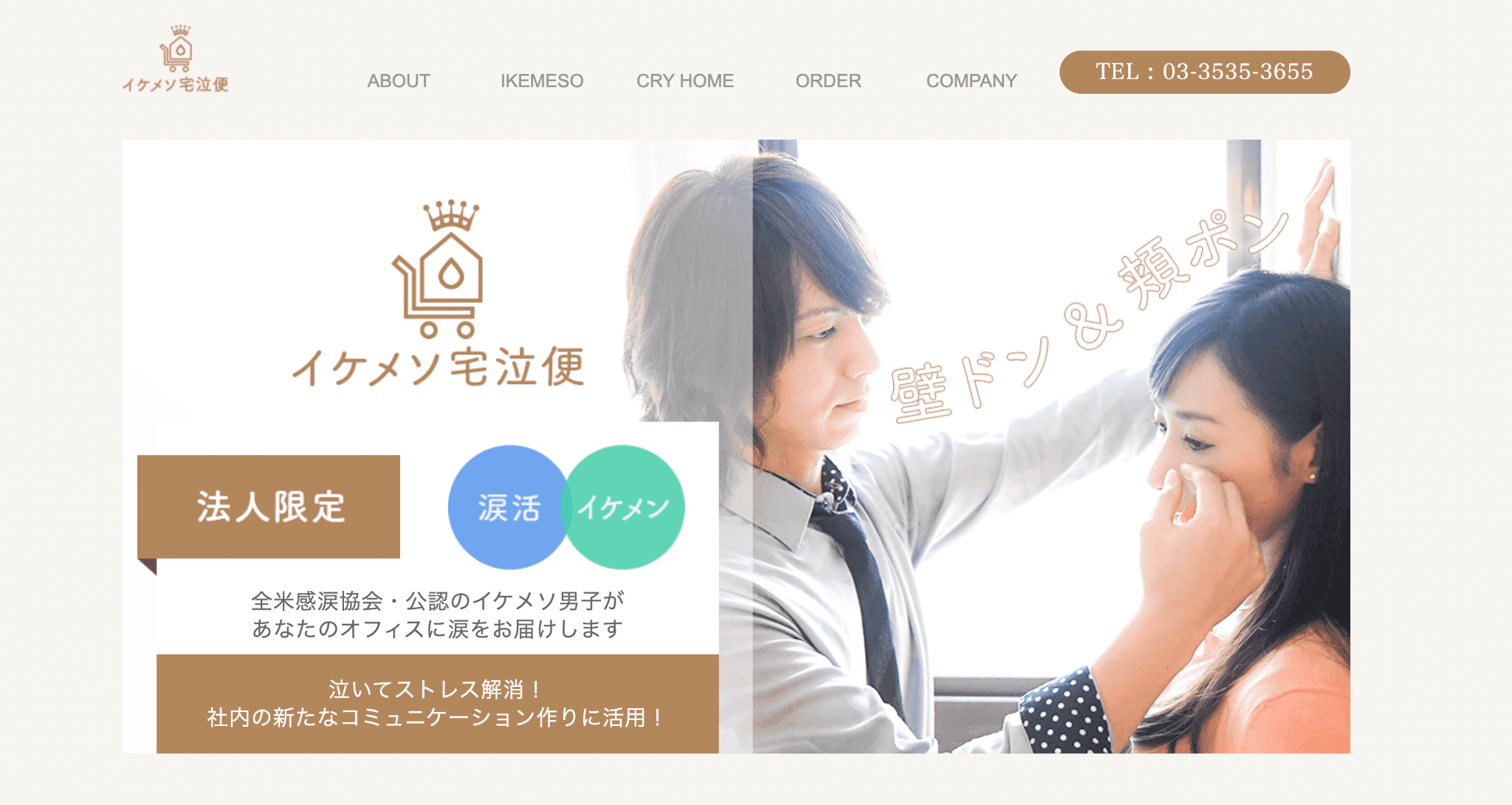
<Photo: Ikemeso Danshi Official Website>
Two years later, he productized it further. Ikemeso Danshi ("good-looking men who cry") launched in Tokyo in the fall of 2015: for about $62, a hired man — chosen from a roster of six, each cast as a different "type," the intellectual, the bad boy, the dentist — visits an office, screens a sad film for the room, and wipes everyone's tears with a handkerchief once they start. Within months, more than twenty-five Tokyo offices had booked it. By then Terai had already published eleven books, one of them a photo collection of men crying.
It’s easy to laugh at the image of attractive men wiping away office workers' tears. It is harder to dismiss the underlying question Terai is asking: if companies invest in stress management, meditation, and team-building, why shouldn't emotional release deserve its own place as well?
His most famous project arrived years later.
In 2022, Terai installed a capsule toy machine in Tokyo's Kagurazaka neighborhood containing real passport-style ID photographs of strangers who had volunteered to participate. During the pandemic, when masks had transformed everyday interactions, he became fascinated by how rarely people saw one another's full faces anymore.
The machine offered no names, no biographies, and no explanation beyond a portrait.
What began with just ten participants eventually expanded into hundreds, with volunteers submitting their own photographs in hopes of joining the growing collection. Online, the project became known as Kijin Club, introducing Terai's work to an audience far beyond Japan.
On paper, these businesses have almost nothing in common. One is about divorce. Another is about crying. The third is about anonymous faces inside plastic capsules. The common thread is not the product itself, but the absence it responds to.
Terai has said he is fascinated by people's unfiltered selves — the ordinary behaviors, emotions, and moments that usually go unnoticed. Rather than inventing entirely new desires, he looks for needs modern life has created but never quite answered. Then he designs a solution.
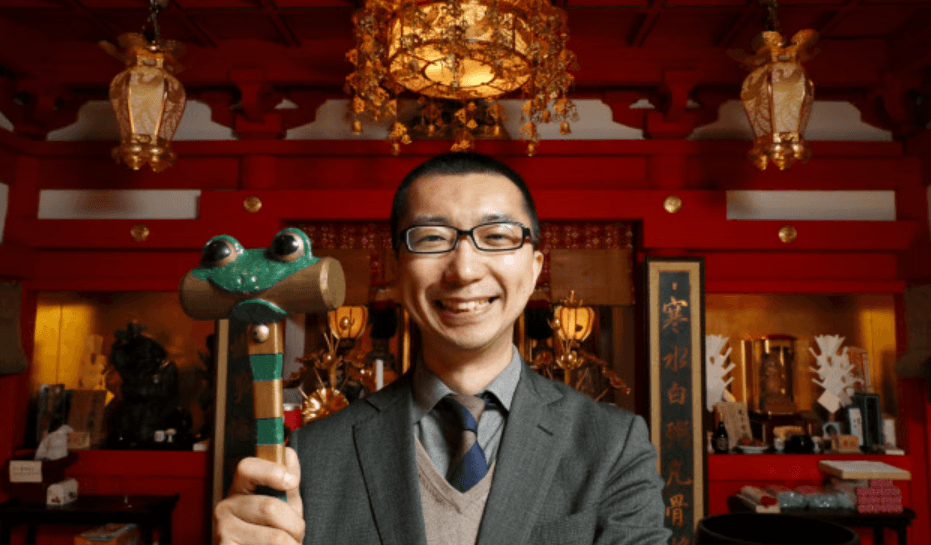
<Photo: Nikkei Online>
That instinct says as much about contemporary Japan as it does about Terai himself.
His divorce ceremonies acknowledge that endings deserve ceremony too. Rui-katsu asks what happens when a culture that prizes emotional composure leaves little room for public grief. The stranger gachapon transforms anonymity — an experience familiar to anyone living in a dense metropolis — into an object of curiosity.
None of these businesses claim to solve Japan's social challenges; what they do, instead, is make them visible.
LATEST