Toko Shimizu
In Loving Memory of a Disappearing Japanese Community
More than 300 scarecrows dwell in Nagoro, Japan – a rural village in Tokushima Prefecture with only 20 residents. Their presence sheds light on a lesser-seen phenomenon unfolding across Japan.
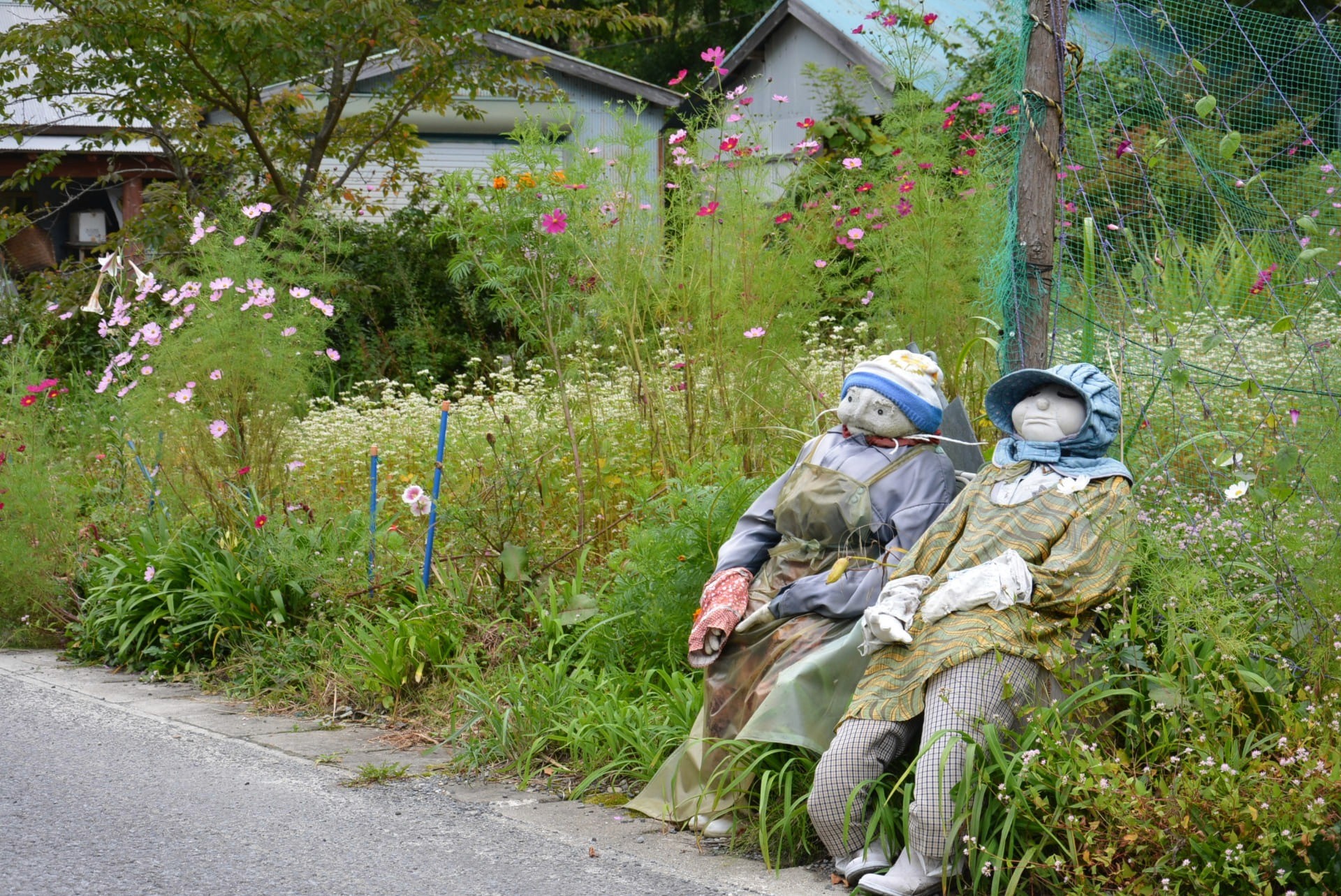
Picture this – you step into a serene, rural village in Japan. Around you, you see a man in construction wear holding a sign for traffic ahead. Two elderly women in kitchen aprons sitting and people-watching from the sidewalk, taking a brief respite from their morning routine. A crowd waiting languidly at the bus stop for their commute, staring into the distance. A scene so ordinary, you would never think to look twice.
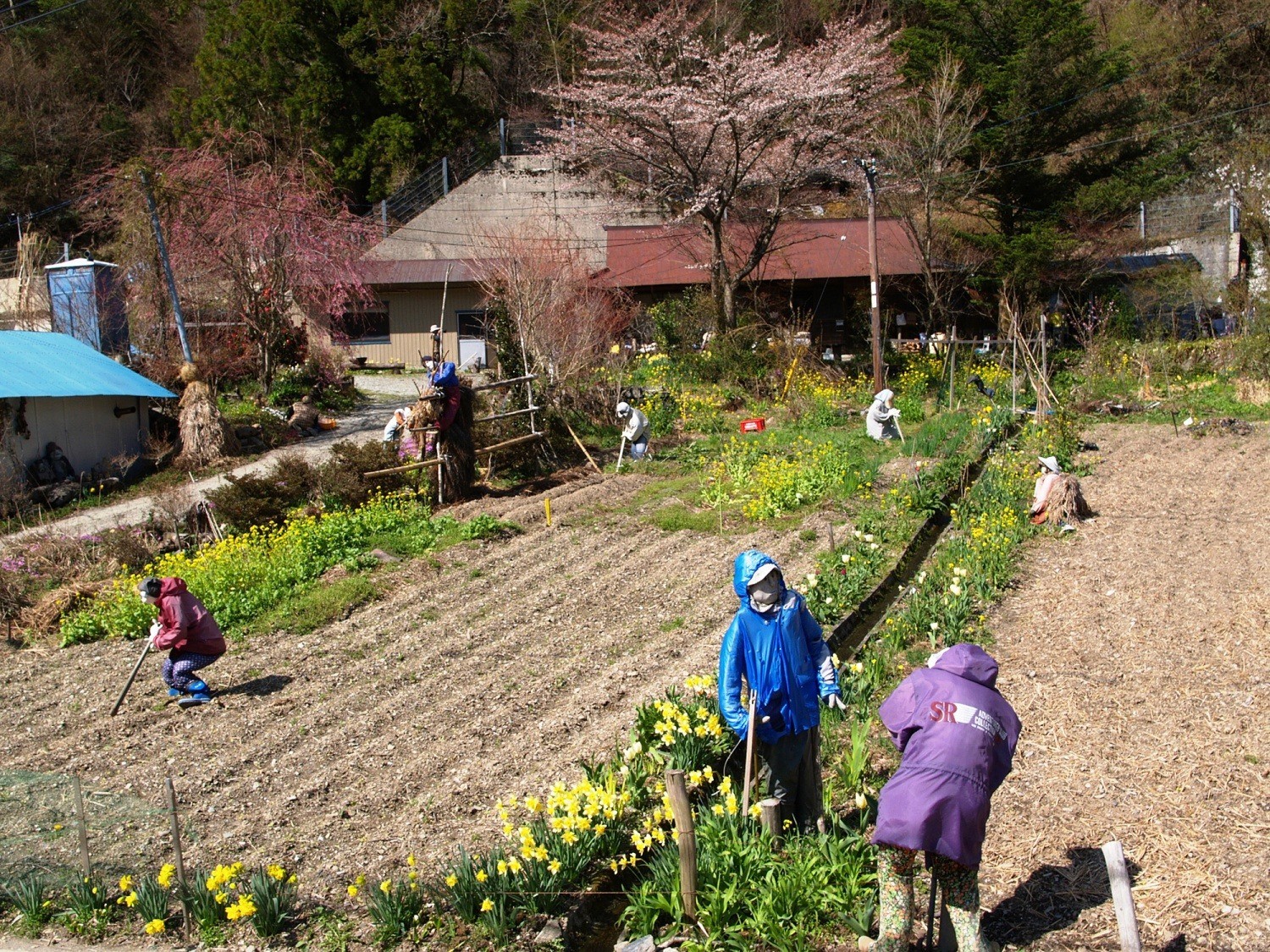
But if you do, you would realise that they are not human. Step a little closer still, and you would see the eyes sewn into their cotton skin, and limbs caught in gestures as if time froze them there, their bodies held together by the newspaper and twigs packed inside. On the village streets, on the rice fields, in the silent homes. They linger along the village streets, among the rice fields, and inside the homes that have grown silent.
<Image: Courtesy of LensTokyo.>
This is Nagoro – a village nestled in the forests of eastern Iya Valley, in Tokushima Prefecture. Once home to over 300 residents, the number has trickled down to just 20 in recent years. In their place now, stand over 300 scarecrows.
Ever since a German filmmaker Fritz Schumann filmed a short documentary Valley of Dolls here, the village has garnered intrigue from all over the world, and while some find it melancholic and sweet, others are struck by the starkness of lifeless figures set against the peaceful run-of-the-mill tableau of Japanese rural life. “Eerie” and “uncanny” are just some of the words you will find floating around online.
<Image: Courtesy of Oboke Iya Tourist Navigation>
What those commentators may not know is that each of these scarecrows are handmade by the people in the village, oftentimes with someone in mind, in their honor.
Take, for example, an old woman scarecrow sitting in front of an abandoned house. “She’s a grandmother who passed away two years ago,” Ayano Tsukimi, then 67 years old, told NPR in 2016. "But she used to sit like that in front of the house, so I made the figure exactly like her."
Ayano is the woman behind this tradition in Nagoro. Initially, she simply wanted to keep birds away from newly planted seeds. But when her neighbors began mistaking the scarecrow for her father and stopping to strike up conversations with it, much to her amusement, an idea took root. Ayano began making more, modeling them after people who had lived in the village, both living and gone, clothing them in accessories, blouses and jackets that once belonged to them. For others, she invented backstories, jobs, and personalities – still giving each one of them a character of its own that comes through in their faces and clothing.
"...it's indeed something to bring back memories." spoke Osamu Suzuki, a 68-year-old resident of Nagoro to Reuters.
Eventually, more people in the village began joining in.
Memories – precisely what Nagoro seems to brim with. The scarecrows scattered throughout the village are reminders of the people who once gave Nagoro its life, and in the tender act of honoring and remembering them, their very absence is made visible. Undeniable. A faint apprehension coexists with precious nostalgia.
This unease also speaks to a much larger issue unfolding across Japan. Villages like Nagoro are slowly vanishing. As the population ages and younger generations move to cities in search of opportunities, rural communities are steadily emptying out. Japan’s population declined by a record 3 million people over the five-year period leading up to 2025, and is on a trajectory to continue shrinking.
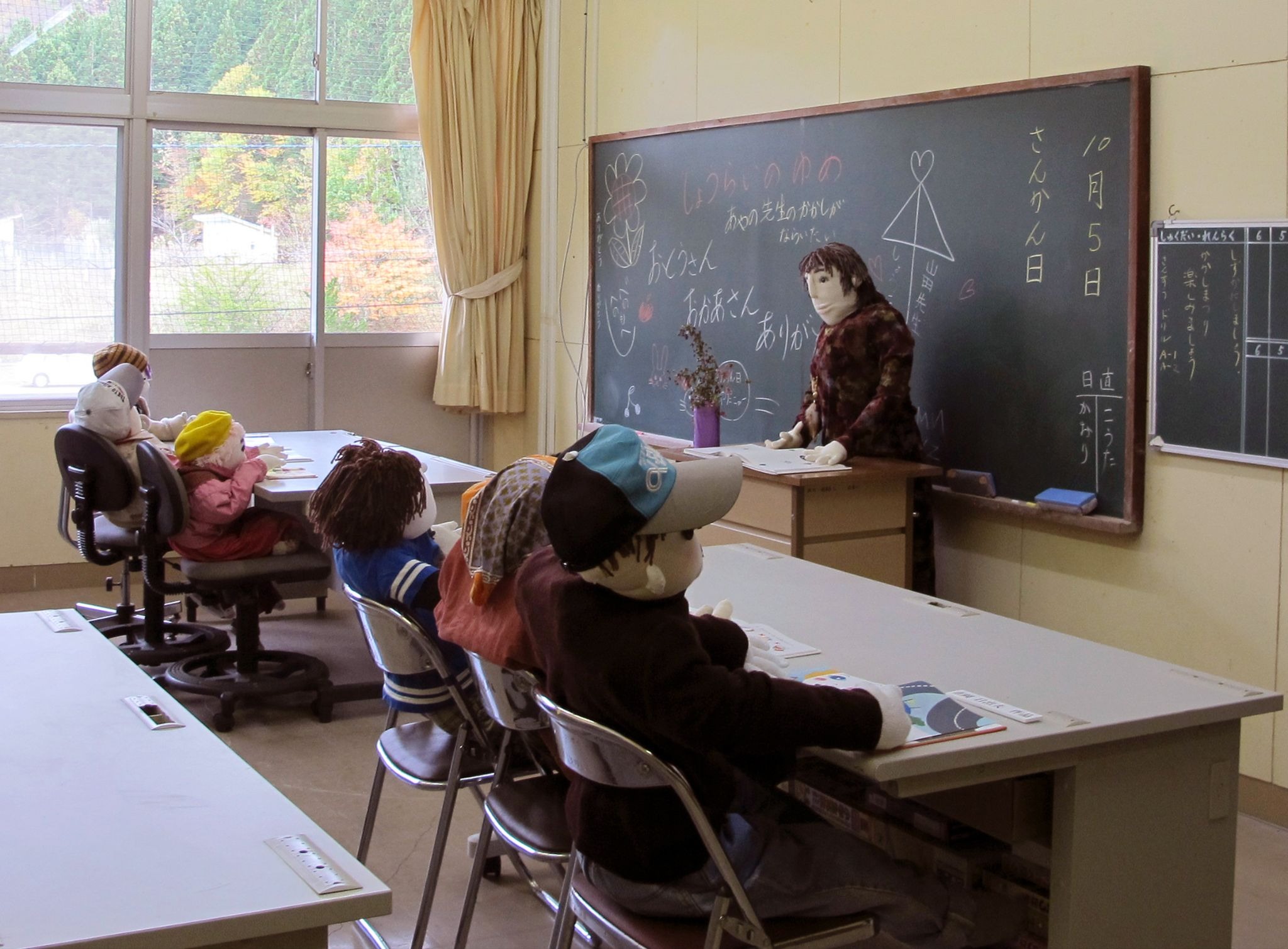
It can be difficult to imagine any part of Japan as vanishing, or its population shrinking, with “Japan-maxxing” content running rampant across media platforms – we see the chaos of Harajuku crossings and the crowds of Shibuya endlessly circulating online. But this image of a crowded, bustling Japan is a reflection of where its population is increasingly concentrated. In 2025, the Tokyo metropolitan area crossed a historic threshold, accounting for 30.1% of Japan’s total population, as universities, jobs, and young people continue to gravitate toward the capital. Meanwhile, in rural areas, homes are left empty and schools are closing down. Nagoro’s only primary school closed its doors in 2012, and the village has been entirely childless since. Its silent abandoned classrooms are filled with scarecrows of children who have moved away.
<Image: Courtesy of The Guardian, 2015.>
Ayano does not necessarily see herself as an advocate. She says she does not make the scarecrows because she is lonely, nor does she think of them as a “project” or as art. She simply makes them because they bring her joy. “Every morning, I just greet them,” she told NPR. “I say ‘good morning’ or ‘have a nice day!’”
Yet the reality of depopulation remains ever present. The piece of the past that these scarecrows hold onto grows more distant with each passing year, while the future of a vibrant community remains uncertain. As Nagoro, like so many rural communities across Japan, continues to face an aging population, an exodus of younger generations, and the pull of urban life, the scarecrows offer a way of holding on to what otherwise is on the brink of disappearing.
The forces driving this change are vast, and often feel beyond the reach of any one person. And the scarecrows do not stop time, nor do they reverse the forces reshaping rural Japan. But they hold something precious in place: the people, gestures, memories, and everyday life that once filled these spaces. In doing so, Ayano has ensured that even as Nagoro changes, its story does not simply disappear with it.
LATEST