Emma Kexin Wang
A Brief History of Queer Japanese Cinema
Japan's oldest queer film festival turns 33 — here's what came before it, and what it still can't contain.
Rainbow Reel Tokyo, Japan’s oldest queer film festival, is holding its 33rd festival this June. Today, at least eight queer film festivals operate across Japan, from major metropolitan centers to smaller regional cities, forming an important part of the country's LGBTQ+ film culture. But these statistics only tell part of the story — the history of queer Japanese filmmaking predates the festival and exceeds its frame.
The first explicitly queer Japanese films appeared in the 1960s, where directors like Shohei Imamura, Susumu Hani, and Toshio Matsumoto, following the French New Wave, started making films within a new and radical political context. Matsumoto’s cult classic Funeral Parade of Roses (1969), a queer retelling of Oedipus Rex, interweaves fictional and documentarian filmmaking to a dizzying effect, depicting both Tokyo’s gay and drag scenes in the 60s amidst real footage of street protests.

<Funeral Parade of Roses, Film Comment>
The 1990s marked a turning point for queer visibility in Japan. Pride parades began appearing, queer film festivals were established, and LGBTQ+ identities entered mainstream media in ways they largely hadn't before. One of the decade's defining films was Ryosuke Hashiguchi's Like Grains of Sand (1995), a tender coming-of-age story about queer teenage boys that remains a beloved classic today.
With the exception of Hashiguchi, the filmmakers who took on queer subjects during the 90s were mostly heterosexual, often only depicted gay male sexuality, and wrote stories revolving around similar plot points: Okoge (1992), Twinkle (1992), and Hush! (2001) all tell of a heterosexual woman who gets involved with a gay male couple. Though seemingly progressive at the time, critics have commented on the fetishization and commodification of gay male sexuality in these films, and though films that depicted queer subjects beyond gay men were existent, they were few.
Concurrent with the birth of queer film festivals in the 90s came activist films, which differed from queer commercial films in subject, technique, and distribution. Made by queer people, for queer people, these films were self-funded, realistic in nature, and are mostly exhibited at queer film festivals. Activist filmmakers like Toshiko Takashi, Hiroyuki Oki, and Koichi Imaizumi remained largely outside the commercial spotlight.
The 2000s started to see more queer subjects beyond gay men. Shindo Kaze’s Love/Juice (2000) tells of a girl falling in love with her roommate, and Hiroshi Ando’s Blue (2002) features teenage lesbian desire. Trans characters saw increased representation as well. In Satoshi Kon’s Tokyo Godfathers (2003), a group of homeless people, one of which is a trans woman, adopts an abandoned baby. Similarly, Naoko Ogigami’s Close-Knit (2016) features queer found family, where 11-year-old Tomo, routinely neglected by her mother, is taken in by her uncle and his trans girlfriend.
In the 2010s, another “LBGT boom” brought the BL (boys love) genre into mainstream media. Ossan’s Love (2016), one of the first Japanese BL TV series, generated so much viewership and revenue that it was adapted for a feature, which subsequently earned 2.65 billion yen and became the 12th highest grossing Japanese films in 2019. The BL industry earned around 21 billion yen domestically during this decade, the number pointing to a continual consumption and fetishization of gay men on part of a majority heterosexual female viewership.
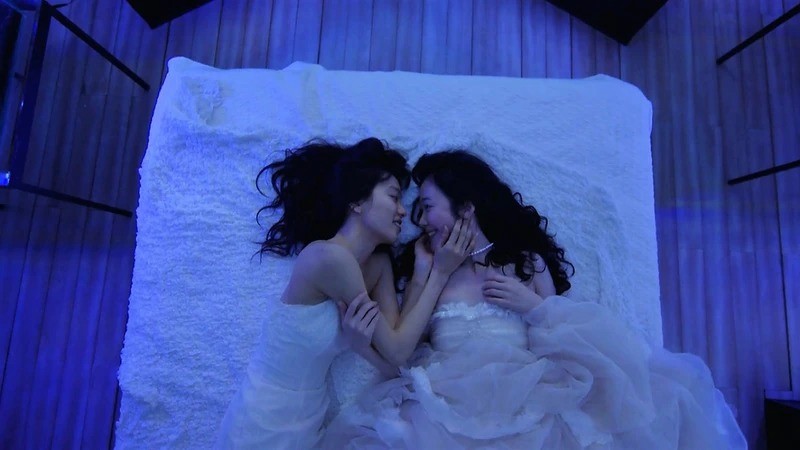
<A Bride for Rip Van Winkle, MUBI>
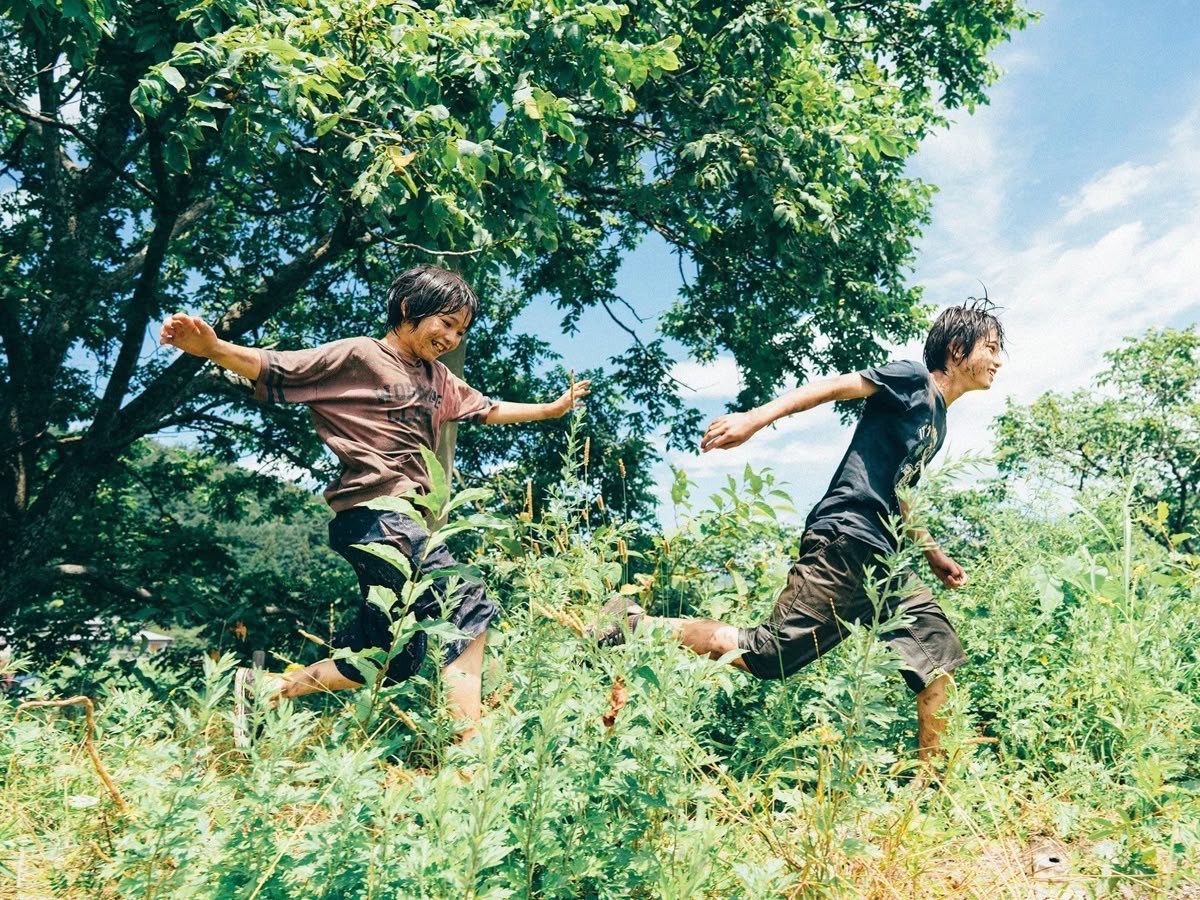
In the past decade, queer Japanese films have expanded their audiences even further, both in domestic and international spaces. One of Japan’s most famous contemporary directors, Shunji Iwai, created A Bride for Rip Van Winkle (2016), a love story between two women casted out of normative society. Netflix picked up Ride or Die (2021), a lesbian murder thriller unabashed with its full nudity and sex scenes. In 2023, director Hirozaku Kore-eda released Monster, a coming-of-age thriller that unfolds around two middle-school boys, which won the Queer Palm at the Cannes as well as receiving 25 million dollars in worldwide gross box office.
Now, thirty-five years after its establishment, Rainbow Reel Tokyo will show critically-acclaimed queer films across the world. Local film festivals, on the other hand, like Osu Queer Film Festival and Fukuoka Rainbow Film Festival, are often the only places that exhibit activist films like Kalanchoe (2018), I Am Here (2020), I Am What I Am (2017), depicting lived experiences of queer people in Japan.
In 1996, Japan’s first lesbian magazine Anise featured discussions of its editors' favorite films, reflecting the central role cinema has long played in queer community-building. Three decades later, festivals such as Rainbow Reel Tokyo continue that tradition. Yet the history of queer Japanese cinema has always been larger than any single festival, encompassing activist documentaries, underground experiments, commercial successes, and stories that resist easy categorization.
LATEST