Toko Shimizu
Tokyo's Rickshaw Pullers Are Rewriting the Rules of an Old-School Job
In Asakusa, a 150-year-old profession once defined by sweat and post sakoku-era survival is now drawing ambitious young women, viral fame, and a surprising new status — proof that tradition doesn't have to mean standing still.
It is June in Tokyo – the very cusp of summer. The air is dense with humidity and the lingering fatigue of the new fiscal year – but in Asakusa, there are people who shoulder weight with remarkable dignity.
Located in northeastern Tokyo, the area is best known for its iconic tourist hot-spots, from the Sensoji temple to Tokyo Skytree. But beyond these, another sight commands attention. One after another, shafu – rickshaw pullers – race through the streets hauling nearly 200 kilograms with astonishing speed. Weaving through the current of people and vehicles in their happi coats and tabi shoes, they like they’ve timeslipped from the late 1800s.
Except it’s 2026.What’s behind them in the streets are not wooden machiya houses or Meiji-era red-brick buildings, but neon vending machines, konbinis and rows of office buildings. Somehow, jinrikisha, a mode of transport with 150 years of history, is undeniably,seamlessly a part of Asakusa’s modern Reiwa-era scenery. When so much of tradition risks being lost completely, or remains preserved and separate from daily life, jinrikisha culture has somehow managed the harder third option: to evolve alongside the changing times and its people.
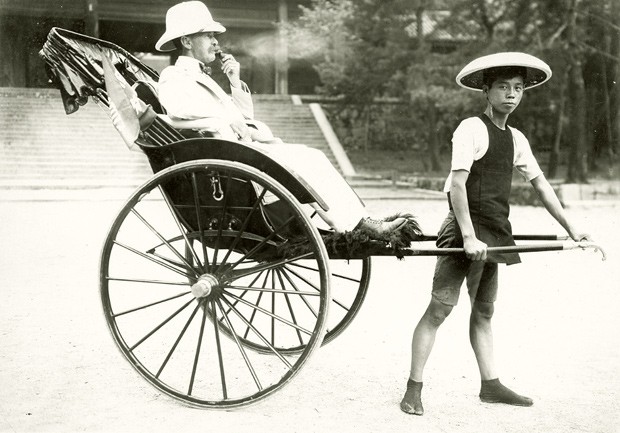
Long before it became a tourist attraction, the jinrikisha was a symbol of a nation in transition. It emerged in the wake of the Tokugawa Shogunate's collapse in 1867, which brought an end to more than two centuries of Japan's isolationist sakoku policy. As the country opened its doors to the world, Western inventions and influences poured in — transport included. Jinrikisha quickly became integral to the lives of the masses. Its popularity was never quite static, as it rose and fell alongside other modes of transport that were emerging, like railways in 1872 and taxis post-WWII.
The major turn came roughly a century later in 1970, when jinrikisha was re-introduced for tourism in Hida Takayama, a city in Gifu prefecture. Pullers began doubling as expert storytellers and guides, providing commentary on the sights and local history while shouldering the profession's relentless physical demands.
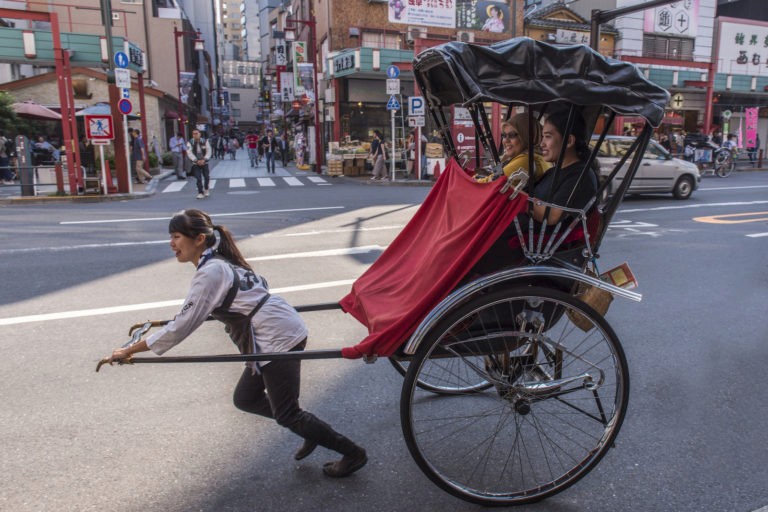
<Image: A female rickshaw puller carrying tourists through Asakusa, Tokyo. Courtesy of Savvy Tokyo.>
Then more recently, the rise of social media is marking another decisive shift.
With greater visibility online, more women have begun stepping into the world of rickshaw-pulling. Tokyo Jinrikisha, a prominent company operating in Asakusa, reported that women made up about one-third of its 90 pullers as of 2019. Many of these women were inspired after discovering female rickshaw pullers online, where videos and social media posts challenged long-held assumptions about who could do the job.
One university student told Reuters that her interest was sparked after taking a ride with a female shafu. She searched for more videos, and seeing other women excel gave her the confidence to apply.
"I saw many videos and photos of women working hard in training and making their debut as rickshaw pullers. Seeing that gave me an idea: 'If they can do it, maybe I can too.'."
Pulling a rickshaw is no small feat. Training takes roughly four to six months. On average, a shafu runs 20 to 30 kilometers a day while carrying a carriage with one or two passengers.
The profession also carries a long-standing expectation that it belongs to men. One female shafu recalled:
"From the outside, it looks like a glamorous world, but once I got into it, things were different and there were tough times. I’ve been rejected by customers who said they preferred a male puller."
Some are more direct in their disapproval – telling the shafu that women shouldn't be doing such strenuous physical labor. Other times, male customers try to subtly test the women’s knowledge of the history and routes. Sexual harassment remains a reality too.
Even as the number of female shafu grows, acceptance hasn't kept pace everywhere. They keep running anyway.
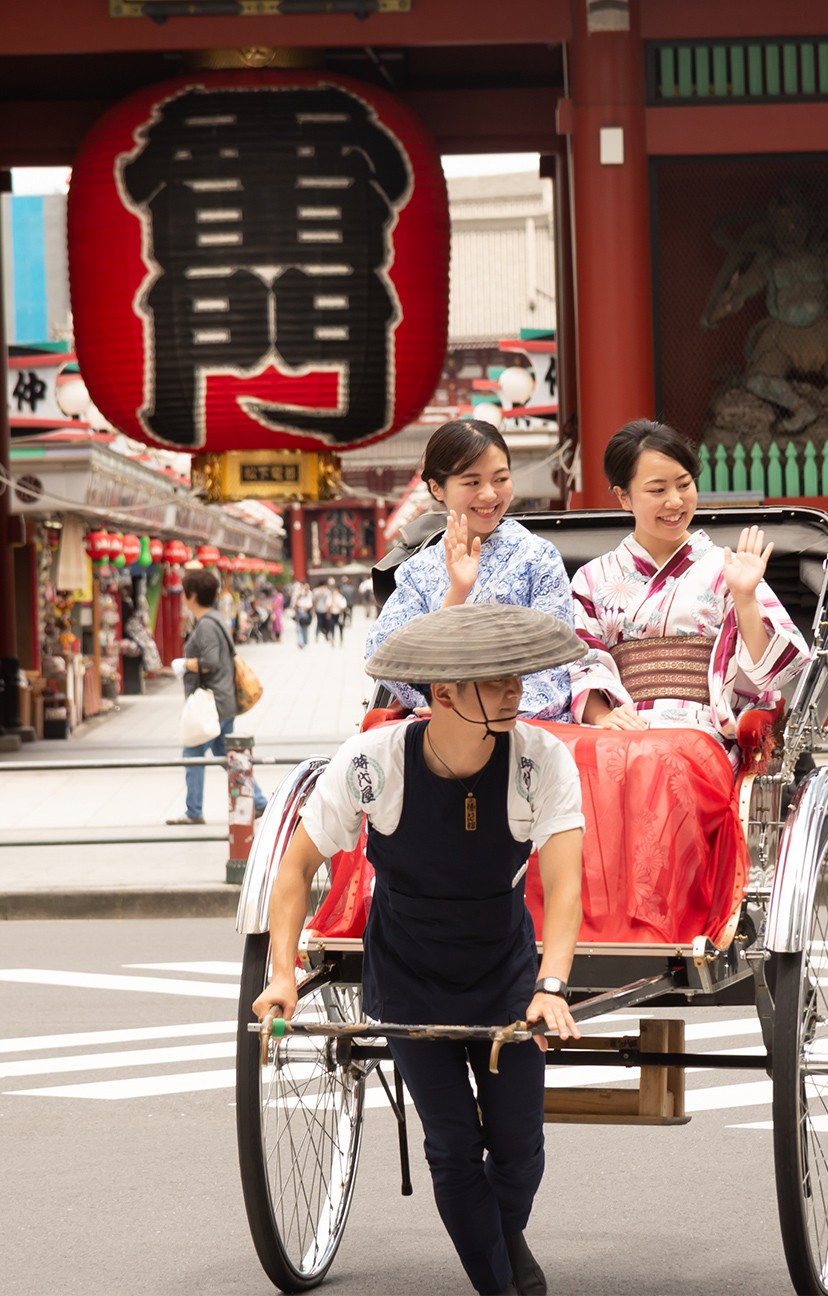
<Image: A rickshaw puller guides two passengers in kimono past Kaminarimon Gate in Asakusa, Tokyo. Courtesy of Jidaiya Asakusa Rickshaw.>
There’s another factor drawing young people to the job: being a shafu now carries more social currency than ever before. There’s a Japanese colloquial term – supekku (スペック) – describing a person's overall "specifications" or perceived value, including looks, education, income, physical ability, and social skills. It's a way of measuring how impressive someone is on paper.
Today's shafu are expected to embody many of those qualities at once. Beyond physical endurance, they are expected to speak English, understand local history, navigate the streets effortlessly, and engage passengers from around the world.
"English is now a requirement here. We don't hire people with poor language skills," says Kosuke Kajiwara, manager of Ebisuya Asakusa.
A role once associated primarily with physical labor has become, somehow, a compelling resume point. High supekku by any metric.
After more than 150 years and several reinventions, the jinrikisha is still evolving. Born out of necessity in post-sakoku Japan, it now reflects something different: not just how tradition survives, but how it acquires new meanings with each generation. That meaning is being written, in part, by women who were told the job wasn't theirs to do. It is no longer at risk of dissolving into vintage aesthetic. It has a place in the modern world — touching people's lives, challenging assumptions. Which is what tradition does when it's actually alive.
LATEST